Total Pageviews

Wednesday, January 16, 2013

Have small, projectile emitting device with limited magazine capacity - will travel

The shootings at Sandy Hook Elementary School in Newtown, CT on December 14, 2012 were a terrible tragedy. As were the shootings at Columbine and Aurora, CO; as was the shooting of Congresswoman Giffords and nineteen others near Tuscon, AZ. As were the assassinations of John F. and Robert Kennedy, and Martin Luther King. I could spend a long time listing other tragic examples of one or more people using guns to prematurely end the lives of fellow citizens in America.

I will mention one more: on August 1, 1966 Charles Whitman killed his wife and mother, went shopping for supplies (guns, ammunition, food, water, etc.) and then climbed to the observation deck at the University of Texas clock tower and over the next several hours shot and killed fourteen people while wounding thirty-two others.

Charles Whitman, 1963

Gun powder was invented in China during the thirteenth century. Humankind, being an industrious and creative lot, have continued to refine and enhance that original invention to the point where we have some pretty amazing devices that can propel deadly projectiles with pinpoint accuracy. It took roughly six hundred years from that first invention for Samuel Colt to mass-produce the first multi-shot, revolving firearm.

It has taken us a much shorter period of time to reach a point where it's almost as easy to purchase a handgun as it is a hamburger.
Glock.40 caliber - available at Academy Sports and Bass Pro Shops everywhere

Guns are as American as apple pie and the Fourth of July. The Second Amendment to the US Constitution states: A well regulated Militia, being necessary to the security of a free State, the right of the people to keep and bear Arms, shall not be infringed. Through the Civil War, the great Western migration, a couple of world wars and several industrial and technical revolutions, guns have been off limits to any but the most superficial of regulations. I remember reading that one of the reasons there were less deaths in the Old West than popularly assumed was because when everyone has guns, we're all a lot less likely to start a ruckus. Of course, that was before MTV made it trendy to pop a cap in someones, er, derriere.

I wasn't around for the late fifties and early sixties classic shows like Peter Gunn and Have Gun Will Travel. But I clearly remember Wild, Wild West, the iconic Clint Eastwood films of the seventies and many others in which guns were glamorized. How many of us - me included - went around quoting this scene from rebel hero Harry Callahan:


Looking back, I wonder what's so glamorous about a 44 Magnum (no longer the most powerful handgun in the world) being able to blow your head clean off?

Nowadays, instead of watching our heroes on the tube, we actually get to play them - to be them - on-screen. Unlike guns, video games have taken a much shorter arc into popular culture. We have gone from Pong in 1972 to Grand Theft Auto in 1997, followed by titles like Halo (2001) and the even more realistic Call of Duty (2003). Forget Superman; why be a spandex tights-wearing man of steel when I can mount up as Master Chief (John 117) and use a variety of spicy ordinance to waste Covenant scum?


Forget the six hundred years between gun powder and the first revolver; forget the nearly one hundred years between the first revolver and the first automatic pistol; it only took us twenty-nine years to go from hitting a tiny electronic ball back and forth across the screen with paddles to an immersive , unlimited body count experience like Halo. If only there was a way to plug people into their Spartan suits when uncontrollable violent urges come upon us.

According to the FBI, in 2011, an estimated 14,612 persons were murdered in the United States. This was a 0.7 percent decrease from the 2010 estimate, a 14.7 percent decline from the 2007 figure, and a   10.0 percent decrease from the 2002 estimate. On the contrary, the latest data available from the Centers for Disease Control and Prevention indicates that 38,364 suicide deaths were reported in the U.S. in 2010. This latest rise places suicide again as the tenth leading cause of death in the U.S. Nationally, the suicide rate increased 3.9 percent over 2009 to equal approximately 12.4 suicides per 100,000 people. The rate of suicide has been increasing since 2000.

Although these statistics don't tell the whole story regarding homicides and suicides involving guns, the American Foundation for Suicide Prevention notes that firearms are used in more suicides than homicides, death by firearms is the fastest growing method of suicide, and firearms account for fifty percent of all suicides.

2011 data from the Centers for Disease Control and Prevention states that guns accounted for 31,940 deaths:
  • Accidental discharge: 851
  • Suicide: 19,766
  • Homicide: 11,101
  • Undetermined Intent: 222 
This seems to align with the FBI data above, if you assume that 3,511 people were murdered in the United States in 2011 without the aid of a gun.

So in 2011, over 31,000 people died as a result of gunshots. At the risk of being cast as insensitive, if there is one common thread in all of this, it is that a person has pulled the trigger in each of these cases. In an NPR report this week, Dr. Paul Appelbaum (professor of psychiatry, medicine and law at Columbia University) opined that, "The approach that calls on us to identify dangerous people is inevitably going to fail. That's an impossible task, at least given our current state of knowledge. And so a much more reasonable set of approaches would focus on decreasing the availability of means of mass violence rather than trying to identify every person who's likely to get behind an automatic weapon and start pulling the trigger."

I agree that it will be harder to solve the problem at a human level vs. regulating the tool that is used in the crime, but in the end, if we don't solve the human problem another tool will be found. The New York gun law signed by Governor Cuomo yesterday limits, among other things, the capacity of the magazine to seven bullets. I would counter with: if we do nothing about the human element, we can register all gun owners until we're blue in the face and we can decrease magazine size to one but people will still find ways to kill themselves and others using guns.

I felt sick reading the account of Charles Whitman. He didn't really have any high capacity weapons - he just had a lot of weapons and a lot of bullets. One could argue that we need to restrict the number and type of weapons any one American can own as well as the number of bullets each American is allowed to have. If you did, you would be in direct contravention of the Second Amendment.

...the right of the people to keep and bear Arms, shall not be infringed.

I see both sides of the argument. Obviously there is a fear that if guns become highly regulated then there is a loss of freedom. Conversely, to do nothing - to let gun ownership, technology and capacity continue to escalate with no regulation could also be considered foolhardy - and tragic.

Here's a radical thought for the evolutionists in the discussion to ponder: could this be an example of natural selection at a higher magnitude? Is there something horrifically self-regulating about the increased number of deaths caused by guns?

I don't have the answers but Americans need to be talking about this. Not screaming at each other and pointing fingers - but having a reasonable discussion to find solutions that maintain our freedoms and protect our citizens at the same time. If we restrict the size of magazines, I believe we will just shift the technology creep over to the bullet itself. It's likely that someone will simply develop a more powerful, more deadly round. I know President Obama's proposal wants to restrict sale and possession of armor-piercing rounds. The New York bill bans magazines holding more than seven rounds. But if those seven rounds are powerful enough to kill someone no matter where the bullet strikes, or if they are made to explode on impact or if they are laced with chemical or biological agents - have we really solved the problem?

What do you think?

X

Tuesday, January 15, 2013

Literary review: Sovran's Pawn


It's been a long time since I've read science fiction. I have lived in several genres over the years: Fantasy, western and archaeological adventure for the most part. I've dabbled in Gothic (Wuthering Heights, Rebecca), suspense (Ludlum, Francis, Follett, MacLean) and others. Sci-fi has always been something that I just had to be in the mood for. I've hit some of the classics like Starship Troopers, Stranger in a Strange Land, Dune, and Ringworld, but anything you might term recent has been in the Star Wars universe or the excellent Star of the Guardians series by Margaret Weis, who also pens the very 'spacey' Mag Force books with Don Perrin.


You might ask yourself, "Isn't this supposed to be a review of 'Sovran's Pawn'? Why is he rambling on about all these other books?"

First, I want people to know that I'm not some yahoo that happened to download Sovran's Pawn for my Kindle, read it, and spew out a generic (and mostly useless) review. If shoppers know the kind of books I've read and enjoyed, they'll be better equipped to take my review in context and have a much better feel for whether they want to spend their hard-earned credits on a worthy novel.

I admit that noting some of the Sci-fi books I've read is also a way to try and gain a little genre credibility; further, I want to let potential readers know that I don't always read science fiction, but when I do, I like the good stuff.

Sovran's Pawn is an extremely well-written novel. As the self- and independent publishing industries have taken off, I've read a fair number of novels that are, to be nice, not very well written. Spelling and/or grammatical errors leap off the pages and, in some cases, spoil the read completely. JC Cassels does not labor under the weight of poor writing. I can honestly say that I did not catch one single error. That doesn't mean there weren't any - it just means that after the first few chapters of no mistakes jumping out at me, I could settle down and enjoy the story.

Sovran's Pawn, besides being technically well put together, shows real strength in character development and dialog. Bo and Blade - who reminds me of the line from the Talking Heads' song Life During Wartime, "I got three passports, a couple of visas, don't even know my real name," - are complex characters who live and breathe (sometimes quite heavily). These aren't cardboard cutouts but rather three-dimensional characters that live on the page and quickly begin to pull you into the story and make you care about what happens to them. Secondary characters are also introduced and fleshed out very well. Some readers might be put off by some of the more lengthy segments where in-depth characterization takes place, but I think on the whole it's time well spent as the story will continue far into the future and knowing the folks you're traveling with will be an advantage later.

Steve Martin once made a joke about attending a plumbers' convention and used all sorts of wild jargon that sounded very plumber-ish but ultimately was all bogus. At least I've never come across a seven inch gangly wrench - but I'm not a plumber either. My point is that the science part of this sci-fi novel all worked for me. I'm not an engineer or quantum physicist so I don't require pages and pages of boring explanation regarding the effects of putting an object into a ship's hyperspace wake or complex diatribes on the forces required to escape a strange planet's gravitational field. With all that said I believe Cassels got the tech right and also applied it in the right amounts. Sovran's Pawn is a novel about people that happens to be set (mostly) in space. It's not a space novel that happens to have people in it.

Lush descriptiveness is one of the things I look for in a good novel. It's devilishly hard to pull off without sounding long-winded. Sovran's Pawn isn't quite as descriptive as I would like; there are some scenes where I just couldn't visualize the setting as clearly as I wanted to. Now, that may be exactly the way it was written, but I tend to read novels in which the author spends a little more time painting the world for me so I have a deep, mental image of the landscape the characters are inhabiting. I'm not saying the descriptiveness is bad in Sovran's Pawn - it most certainly is not - it's just a little less than optimum for me personally. I don't get paid to be a critic so take it for what it's worth - an opinion.

If I had to single out one thing to pooh-pooh about Sovran's Pawn it would be that - to me - it read kind of like a romance novel in space. Sovran's Pawn doesn't have Blade running around with no shirt on, flexing; it definitely wasn't that bad but - and this may be a mandatory character building exercise - Cassels spends a great deal of time constructing the relationship between Bo and Blade. Again, that's my opinion and if you like being up close and personal as two adults get to know each other better, this is your book!

Let me clarify one other thing: This is a grown-up book. There are a (very) small number of expletives used, and those were for good effect and in no way gratuitous. But Sovran's Pawn deals with some relatively mature themes so I'd hesitate to recommend it to some of my younger or more conservative friends. With that said I applaud the author's handling of the aforementioned mature themes. Cassels obviously spent a great deal of time crafting this story and although there were a couple of scenes that made me wriggle a little (I'm getting sensitive in my old age) this would earn a relatively mild PG-13 if it were a movie.

If you've read this far you should know that Sovran's Pawn is a darn good book. And despite my delicate sensitivities I will be waiting patiently for the next installment of the Black Wing Chronicles. With apologies to the author who, having read this, probably thinks I'm a lunatic; I have tried to be as forthright in my assessment as I could be. Reading material is a very personal thing and each one of us has different tastes. While there are some things about Sovran's Pawn that I might wish were a tad different I can roundly appreciate a well-written novel.

Have a read and tell me what you think!

X


Boring disclaimers:

The Kindle version of Sovran's Pawn that I reviewed was purchased by me on Amazon.com - I received no compensation for this review, other than the pleasure of reading a great book.


Friday, January 11, 2013

Do you need religion?

Religion is defined (by Google) as:

Noun
  1. The belief in and worship of a superhuman controlling power, esp. a personal God or gods.
  2. Details of belief as taught or discussed
I would argue that their definition - especially number 1 - is not accurate. 

Google's definition of faith is:

Noun
  1. Complete trust or confidence in someone or something.
  2. Strong belief in God or in the doctrines of a religion, based on spiritual apprehension rather than proof.
If you look at Google's first definition of religion and their second definition of faith, you might come to the conclusion that religion and faith are the same thing. They are not.


Aboard the Deathstar (Star Wars IV - A New Hope), General Motti made the mistake of questioning Darth Vader's faith in the Jedi religion:

Don't try to frighten us with your sorcerer's ways, Lord Vader. Your sad devotion to that ancient religion has not helped you conjure up the stolen data tapes, or given you clairvoyance enough to find the rebel's hidden fort...

In the film, General Motti did not need to have any faith at all in the Jedi religion to feel its effects.

In real life, that is not the case. Whichever God (or god, or gods) someone believes in - i.e. has faith in - determines what religious practices they adhere to: how and where they worship, how they pray, what activities they engage in as part of the expression of their faith. In essence, it is the outward expression of our faith that is most closely tied to how we become identified (by others) with a particular religion. And short of just telling someone about it, there's not a lot we can do to help them experience our faith first hand.

There are times when I wish my faith in Jesus Christ gave me the ability to reveal His power to others in more tangible ways. Not to administer a force choke to non-believers; but more to act as a visual aid that would help others understand the joys of faith as I have been blessed to experience.


Unfortunately, there are so many religions in the world today that it's nearly impossible to share one's faith without being labeled intolerant, or worse. Let me be clear: I don't mean it's unfortunate that so many people can find peace and fulfillment in their particular faith/religious practices; I only mean to say that humans have tended to adapt religion into something that resembles more of a feel-good effect than a true faith-based existence.

Take the image above; as someone who has taught Bible study I can easily point out several things that are totally, um, wrong with that picture:
  1. The Bible tells us not to worship idols. An idol is a man-made image...how could a man-made idol be God?
  2. In the Bible, Jesus made the ultimate sacrifice for humankind; there's no need for us to sacrifice anything - even flowers and milk - in order to curry God's favor.
  3. As atheists and many others are fond of pointing out the Bible also says, "Thou shalt not judge."
Of course, that last one is perhaps the Scripture that is most often taken wildly out of context. But that's a different discussion.

What does religion do for us? 

What a huge topic. Religion - what I think of as the trappings of faith - includes going to church (or the mosque, synagogue or temple), study of one's holy texts, prayer, perhaps singing, chanting, taking the Lord's Supper, and many more ways of acting out our chosen faith.

And that brings up another topic: choice.

As a Christian, I believe that God gives us free will. He offers us the gift of salvation through the sacrifice Jesus made for us by dying on the cross. We can either accept that gift - or not. It's our choice. Free will also applies to the events that happen in our life. This is another discussion much larger than a single blog post. Some people will argue that if God is omnipotent and knows everything that ever happened and everything that ever will happen, then there is really no such thing as free will; everything is preordained because God knows what is going to happen and when it is going to happen.

But this is kind of like the circular argument that we all enjoyed in The Princess Bride.

Note to self: Vizzini kind of looks like the priest in the cartoon above, doesn't he?

Just before he died from drinking poisoned wine, the character Vizzini chortled, "You only think I guessed wrong! That's what's so funny! I switched glasses when your back was turned! Ha ha! You fool! You fell victim to one of the classic blunders! The most famous is never get involved in a land war in Asia, but only slightly less well known is this:  never go in against a Sicilian when death is on the line!! Ha ha ha ha ha ha ha!! Ha ha ha ha ha ha ha!! Ha ha ha..."

Prior to his untimely demise - untimely to anyone except God, of course - Vizzini and the Man in Black engaged in a battle of dizzying intellects. We all know how that one turned out and if God truly is omnipotent, then He knew Vizzini would die. The thing about free will is that God may know...but we don't.

Hours ago, I entitled this blog, "Do you need religion?" After fighting down the urge to quote a line from Dirty Harry, I would argue that it's not religion we need, it's faith. Specifically faith in God. But where does that come from? Again, we come back to choice. My faith is based on a specific and personal experience when I believe that God spoke to me through His Holy Spirit - and I made the choice to put my trust and my faith in Him. I didn't just up and decide one day that God really did exist and gosh darn it, it seems like a good idea to become a Christian. 

Faith is not an intellectual exercise. You can hold an intellectual discussion regarding the existence of God but I would put forward that if you are going to believe in the God of the Bible - or any god for that matter - it is irrelevant how much intellect you apply or how much proof you have. Faith is a matter of believing what is unseen. Jesus said it best in John chapter 20:

Then He said to Thomas, "Reach here with your finger, and see My hands; and reach here your hand and put it into My side; and do not be unbelieving, but believing."

Thomas answered and said to Him, "My Lord and my God!"

Jesus said to him, "Because you have seen Me, have you believed? Blessed are they who did not see, and yet believed."

I guess what I'm trying to say is, no, we don't need religion; we need faith. The Bible asks us not to forsake gathering in fellowship with other believers. As a Southern Baptist, I take part in the two primary ordinances of the church: Baptism by full immersion (as a public demonstration of my faith; being baptized didn't square me with God) and regularly participating in the Lord's Supper. I do my best to try and live a good life, but I will never be perfect no matter how hard I work at it.

I realize that accepting God into my heart does not immediately and forever make me a good person. But by accepting that His Son died for my sins, I can receive that gift, and in return, I want to try to do the best I can every day. I heard a great saying the other day: Church is a hospital for sinners, not a museum for saints. If you go to church and are offended because people there act a lot like people everywhere else, don't worry; if their faith is sincere, they are just there trying to get better.

I'd love to hear what you have to say on the subject, whether you agree with me or not.

X


Tuesday, January 8, 2013

First Frost - a literary review


This is embarrassing. Grown men are not supposed to be bowled over by novels clearly written for young (and likely female) audiences. I have the pleasure of being in a writer's group with Ms. DeJesus and when a chance came along to purchase the Kindle version of First Frost on a holiday bargain, well, I had to go for it. I had some extra credits on my Amazon Christmas gift card and said to myself, "What the heck?"


Having previously read the synopsis for First Frost - as well as a few blog reviews - I figured it would be kind of a girly fairy tale with a twist or two. From what I'd seen and heard, there was enough to interest me. I write in the fantasy genre and fairy tales are, at heart, fantasy; so...

First and foremost, First Frost is an excellent novel. It is well written with engaging characters and a tight, well-defined plot. The pacing is perfect; at no point in the story did I say to myself, "That's bogus! Character X would never be able to pull that off," or anything of the sort. The growth of Bianca Frost, the story's main protagonist is beautifully written and despite my rather gruff, public pooh-poohing of modern, young adult fiction, I was bowled over by what a great book First Frost is.

No novel is perfect and, if I thought hard, I could probably list a couple of grammatical slips that might have annoyed me but it would amount to nit picking at best. One thing I've noticed while reading new fiction over the last few years is that most of the books universally have a smattering - to a lesser or greater degree - of spelling and/or usage errors. I've read some brilliant stories that are able to overcome the author's obvious faux pas and still be good. In the case of First Frost, while there are a few grammatical errors, they are minimal and by the halfway point in the story I had forgotten about the ones I'd noted and didn't discover any more. This could be because there aren't any later in the tale - or it could be because the book is such a splendid read that I failed to even note them. I think I'll settle on the latter.

If I had to pick one thing that makes First Frost stand out it would be the characters. As I've noted in previous commentaries, for me, the mark of a great story is that feeling you get when you close the book at the end and immediately start missing the characters. Bianca, her best friend Ming, mom Rose, dad David and many others came to life vividly as I turned the pages. My hat is off to Ms. DeJesus for filling the world of First Frost with a three dimensional, lovable (and in some cases hate-able) cast of characters.

I highly recommend First Frost and can't wait for the soon-to-be released sequel!

Just don't tell anyone - I don't want to lose my man card :-)

Once you read it, come on back and tell me what you think!

X

Boring disclaimers:

The copy of First Frost that I reviewed was purchased by me on Amazon.com - I received no compensation for this review, other than the pleasure of reading a great book.

For your own copy, click on over to Amazon and get yours! (link to Kindle version)

Wednesday, January 2, 2013

Buccaneer - A Swashbuckling Adventure - and that's no cliché


Last Christmas, Dane Maddock was frolicking in the snow with his girlfriend Jade Ihara - Bones and his sister Angel in tow - when the twisted, Euro-branch of the Dominion decided to ruin his holiday. This year, Dane, Bones, and crew are up in Nova Scotia where Bones' crazy Uncle Charlie is ramrodding a team looking for Captain Kidd's fabled treasure in and around the so-called Money Pit.


I am fresh off reading Buccaneer, an excellent addition to the Dane Maddock adventure series and every time I start to type a highlight, I end up tapping the backspace key because I don't want to spoil any of the numerous surprises that Mr. Wood has in store for his readers. All the things that we've come to expect are here in spades: Action, mystery, adventure, legend, history, babes (as Bones might crack) - and of course - the bad guys.

David Wood continues to mature as a novelist and Buccaneer is his best work in this series yet. It is beefier, cleaner, deeper and more sinuous than its predecessors. I've read all the Maddock adventures and, acknowledging what several other reviewers have noted, there have been a fair number of grammatical faux-pas in previous episodes. And while there are a few still lurking in Buccaneer, the number is down significantly from past books and that improves the overall reading experience tremendously. And to be honest, if I wasn't a writer myself - one who has a hard time turning off his inner editor - I'd likely have missed most of them.

It's been a long time since I've read a book that I didn't want to put down but Buccaneer is one of those books. My wife can attest that several chores did not get accomplished over the New Year's holiday because I had my nose in my HP Touchpad or laptop Kindle app. I can't say much more without getting into details best left undiscovered in a measly review. Mr. Wood's plot is excellent; Buccaneer is rife with well-developed characters and the story's pacing is perfect.

If you want a thrilling read that will hold your interest long after the last page is turned, Buccaneer is the next book you should read. I posted a near carbon-copy of this review on Amazon's website; and for those who might wonder why I graded Buccaneer out at 4 stars instead of 5? Mr. Wood has shown me what he is capable of, improving exponentially with each Dane Maddock adventure. David, I'm sorry, but you're a victim of your own success, and I know you can raise the bar even higher for the next installment!

My Kindle Apps, and that fifth star, are waiting...

X

Boring notes and disclaimers:

1. I purchased and read Buccaneer because I like the series. David Wood did not provide me a review copy in return for this review (not that it would have made any difference).

2. I am not a shill for Amazon.com. But...dang! I purchased and downloaded Buccaneer for Kindle after downloading Amazon's sweet (FREE!) Kindle App for my Windows laptop. And there is this totally cool synchronization thing that takes place: If I read up to a certain point on my laptop's Kindle App, and then later decided to use my TouchPad Kindle App to read some more, it would ask me if I wanted to sync to the latest page read. In other words, I could switch back and forth between laptop and tablet and never lose my place. Kindle rocks!

3. It's not mandatory to read David Wood's previous books in the Dane Maddock series to enjoy Buccaneer, but if you've got time, I highly recommend all of them!

- Dourado
- Cibola
- Quest
- Icefall (a novella)
- Buccaneer

Monday, November 12, 2012

There's a sign post up ahead...

No, it's not the Twilight Zone; it's the new book web entitled Novel Crossing.

The crossroads of fiction and faith...

If you're like me, it's sometimes hard to find good reading material that doesn't compromise your faith. The most exciting new read according to a workplace or community reading group may end up leaving you fifty shades of gray when it comes to being salt and light.

I'd like to recommend Novel Crossing as one of the places you can feel comfortable looking for good reads. I still have some exploring to do there myself but there are some handy search tools, including an alphabetized list of authors.

Take a moment to stop by Novel Crossing and see what you think.

Thanks!

X


Wednesday, October 24, 2012

You're Obsolete, Charlie Brown

I'm not a cry-baby.

I'll admit that I have teared up at our son's graduation ceremonies (high school and college, not kindergarten), but I can get through most of life's events without excessive waterworks. Chances are though, I'm not inviting you to our house for the annual viewing of the Charlie Brown holiday specials. Those darn shows sneak up on you, that's all I'm saying.

The Gospel according to St. Linus

I've seen several email and Internet memes that highlight the dirt, danger and general lack of parental supervision that children of the sixties and seventies endured growing up. I won't bore you with the, "When I was a kid," proclamations except to say that during a normal school day, I walked two miles to school (and back)...that's elementary school by the way; and during vacations, it was out the door and gone until lunch time, and again until dark. I'm sure my mother thought she knew where we were but in reality she had no idea.

We all did stuff like this that our parents never knew about...

I know...it's a different, darker world we live in now; which makes the statements concerning Charlie Brown in this article and the original blog (which the Today show article references) all the more baffling. I agree that bullying has no place in our children's lives. Yet bullying exists in grown up life too, and I don't think retiring the Charlie Brown television specials will stop that. Name calling is bad - we didn't allow words like stupid and that sucks when our kids were growing up; of course that doesn't stop them from using them now - and I'm pretty sure it wasn't the degenerative influence of Lucy van Pelt that lodged these scurrilous terms in our children's psyche.

I suppose the final indignity to our generation is that Dadcamp, the author of the original Retire Charlie Brown blog I reference above, closes with a suggestion to replace Charlie Brown holiday fare with Hotel Transylvania.

Say what?

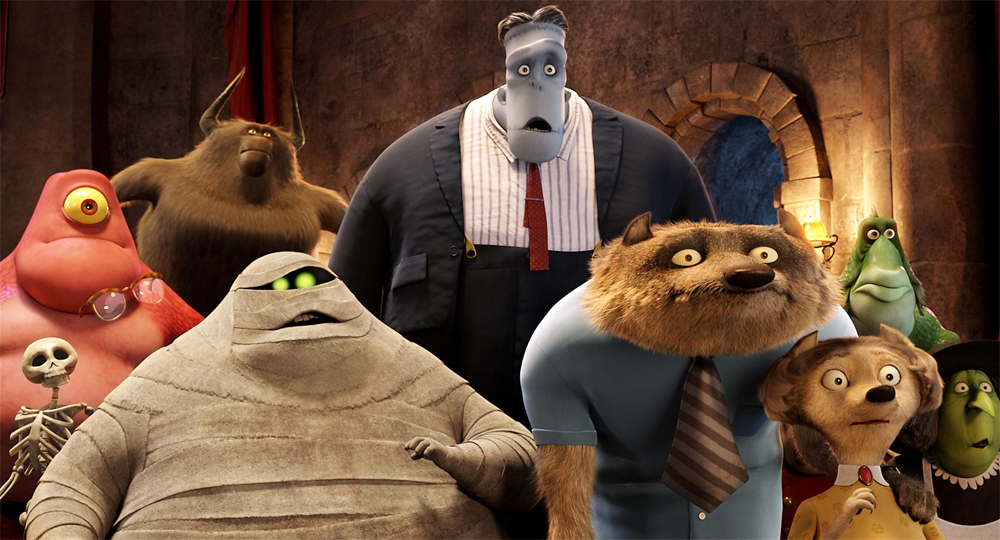
Even the monsters look like they want to see Charlie Brown...


To be fair, I included the trailer above so that we could all have our fun alternately defending or excoriating Dadcamp's suggestion.

Honestly? I'd watch Hotel Transylvania. I'd probably watch it with young kids - if I still had some. But to hold it up as a shining beacon of superior children's fare while figuratively pulling the ball out from in front of Charlie Brown one last time?

Evidence for the prosecution (and this is just from the trailer):
  • Dracula singing a sweet lullaby to his baby daughter then giving us the monster face when he gets to the part about anyone messing with her...
  • An animated suit of armor getting kicked in the groin, um, area (I have to admit I laughed when he said, "Why did that hurt?")
  • And of course, the general idea that there are monsters in the world, albeit just as neurotic as we are, that can't stand people
Even Monsters, Inc. had a more benign take on monsters' existence in our world. Is anyone concerned that Hotel Transylvania is going to raise up a whole new generation of vampire-loving tweens? That's a topic for another blog...

I'm trying not to let the golden haze of pleasant memory overshadow my objectivity here but one other small issue I'll point out: Imagine this conversation between Dadcamp and  his 5-year-old son...

Son: Let's watch You don't mess with the Zohan.
Dadcamp: Um, we can't.
Son: Sure we can, here it is on NetFlix.
Dadcamp: No son; I mean we can't because it's not an okay movie.
Son: But Daaaaaaaaaad...what's wrong with it? I mean, like, Adam Sandler is in it and he was funny in Hotel Transylvania; you even said so.
Dadcamp: I know son. But that Zohan movie is different and Mr. Sandler isn't as good in that.
Son (pouting): Okaaaaay. Hey - wait a sec! Let's watch The Longest Yard - that's a FOOTBALL movie!

You get the idea...

And don't think for a minute that your five year old child won't be able to learn the names of other Adam Sandler movies. 

For whatever pain and suffering the Charlie Brown holiday films may cause socially concerned parents in the new millennium, I don't think you'll ever have to worry about Linus spouting one of the seven words you used to not be allowed to say on television in some other show that your kids will want to see because the think Linus is funny in It's the Great Pumpkin, Charlie Brown.

What do you think?

X

Saturday, October 13, 2012

Does being 'American' really matter?

Most of my blog entries here are faithful to the title - and the spirit - of my blog: Stream of Consciousness.  What does that mean? It means that normally, I will see something, or hear something that causes me to stop and think; it means whatever that something is it impacts me enough so that I feel compelled to write about it - whatever it is.

But life being what it is, there are times when I just can't cast aside whatever I'm doing at the moment to compose a blog entry worthy of putting out there. These instances result in a number of draft blog posts saved for later. Most of these drafts will never see the light of day for one reason or another. I suspect mostly because they would be dated. However, I think the draft I pulled tonight is still topical - perhaps more so than it was when I first made notes on the twenty-ninth of August, 2012.

That morning, NPR's Morning Edition aired a story highlighting why President Obama can't speak freely about race; the story was based on Ta-Nehisi Coates' article "Fear of a Black President" in the (at the time) latest issue of The Atlantic magazine. The article talks about, among other things, the President's response to the Trayvon Martin tragedy and about how Mr. Obama has studiously avoided the subject of race in America - which is odd when you think about it, considering the fact that as the first black president of the United States, Mr. Obama had the most bully pulpit imaginable from which to launch that discussion.

Obama on a hoodie, not in one...

But my idea for a blog after hearing this story back in August, and later reading Mr. Coates' article in the Atlantic, did not involve Trayvon Martin or the state of American race relations. No, the first thing I thought of, as Mr. Coates described how his views and feelings regarding race relations in America have evolved over time, was how I don't even view myself as an American anymore. America is just somewhere I live. The more I learn about God and what, as a believer, my role should be in His Kingdom, the less I am concerned about my role as a citizen of the United States.

It's not that I necessarily want to live anywhere else...although I have done so for large chunks of my life...it's just that all of the issues we seem to wrestle with in the public square don't really attain any sort of stature compared to what Scripture represents - and presents - regarding the way we should be living our lives.

I don't think this happens any more...

What is being American? What does that mean? Is it different than what it meant when I was growing up?

The answer to the first and second question is, "I don't know."

The answer to the third, somewhat counter-intuitively, is, "Yes."

The image above was a daily occurrence when I was attending elementary school in Tampa, FL in the late sixties. Every morning we placed hands over hearts and said the Pledge of Allegiance. The message from that and every other conversation concerning America I can remember from those long-ago days? Being American means something. It's not that we were better than anyone else, just that we had it better than anyone else. America was a great place to live - none better - and we should be proud that we lived here.


I haven't read the book pictured above but the image and especially the title fits my next thought to a T. How has my outlook on being American changed over the years? From childhood, through junior high school in England, being in the armed forces, living in the Middle East? I've been back in the States for almost thirteen years now. Funnily enough, while I lived overseas, I heard more than one person say, "America is a great place to be from," with the emphasis meaning that being an American overseas had its advantages but it was better to from America than in America.

Did America really start going downhill after the Kennedy's and Martin Luther King were assassinated? Vietnam grew into a terrible conflict; students were gunned down at Kent State University; racial struggles tore sections of the country apart. At the same time, we were landing men on the moon, leading the world in technology and so many other areas. Yes, we had problems but America was bigger than that; the very idea of citizenship was enough to quash arguments about the value and prestige of living in this country.

In the Bible, Jesus is constantly fending off the Pharisees who are seeking to back Him into a corner and generate evidence with which to condemn Him. In Luke chapter twenty, they figure they can get Jesus to bad mouth Rome and thus provide an excuse to hand Him over to the occupying authorities. But when asked whether Jewish citizens should pay taxes to Rome, Jesus replies, "Then render to Caesar the things that are Caesar's, and to God the things that are God's." [Luke 20:25 (ESV)]

Even more pointed, is Paul's reminder to Christians, "...But our citizenship is in heaven..." [Philippians 3:20 (ESV)]

As Christians, we have a lot to be looking after that has nothing whatsoever to do with America. As we get into discussions and arguments about the social changes in America, arguments about how God's way should be honored, how the Christian way should be the way this country is run, what are we actually saying?

What stands in the way of us serving God when we focus on our American citizenship? Politics, Fox News, American Idol, the Voice, X-Factor, sports, the Internet?

The day after I made my initial notes for this blog, I watched a few of the speeches at the Republican National Convention. Those speeches brought into focus what I'm talking about - America is no longer the United States or, if we are, it is in name only. This country is fragmenting into thousands of special-interest groups. We've moved away from a united ideal, away from a united direction and toward the premise that (instead of) all individuals being equal, everyone is special. I don't say that to denigrate anyone; the problem with reaching a point where we are rewarding people just for breathing is the slippery slope that leads to the disintegration of the American idea. Every one of us has the opportunity to do great things; but we have shifted that idea to a place where our children are lauded for completing kindergarten. We're creating celebrations for children 'graduating' from elementary school. I'm not saying that we shouldn't encourage our children and praise them in special moments, but moving from 5th grade to 6th grade is just that - a special moment. It's not an achievement that need be so celebrated as to shape the thinking of a ten-year-old to the point where they believe merely doing what they are supposed to do is worthy of extraordinary reward.

moving up to big boy and girl school...

How then do we create the desire to achieve in our young people when they have been conditioned to expect plenary praise for merely being adequate? Yes, every human being is special - in the Declaration of Independence some very wise men wrote, "We hold these truths to be self-evident, that all men are created equal, that they are endowed by their Creator with certain unalienable Rights, that among these are Life, Liberty and the pursuit of Happiness."

Individuals are not special because they simply are; they are special because they were endowed by their creator to be so. America, I fear, has turned into a Me First society. The life, liberty and pursuit of happiness that are our inalienable rights were not to be obtained at the expense of everyone else. The American Ideal is that we can all achieve those cherished things by working together. Yes, we can be individuals but no one is above another.

What happens if enough people start worrying less about personal hegemony and more about being American and beginning to live life as servants of others? In closing, I need to think long and hard about what I have done to help a fellow American achieve life, liberty and happiness lately.

What about you?

X

Tuesday, October 9, 2012

My name is Inigo Montoya...

...prepare to die.


How many milestones pass us by in life? How many anniversaries slip by unnoticed?

Twenty-five years ago, the film The Princess Bride (TPB) was released. Honestly, I couldn't tell you if I watched it in a theater or whether I didn't see the film until after it came out on - gasp - video tape.

I wouldn't have even noticed the anniversary of TPB's release passing me by if I had not read this interview of Mandy Patinkin on NPR.

When you think about it, there are so many wonderful moments and performances in the movie, it's hard to decide which one is my favorite. Certainly, Patinkin's portrayal of Montoya, the Spanish swordsman seeking to avenge himself upon the six-fingered man for the death of his father, is one of the film's highlights. In homage to Rob Reiner's direction and an excellent screenplay by William Goldman (also the author of the original novel), and the many fine actors who brought the story to life, here are my top three moments in TPB:


In the beginning, we are introduced to young Fred Savage, soon to be famous for his role in television's The Wonder Years. Savage's character, known only as the grandson, is sick and staying home in bed. The idea that his grandfather - played superbly by the late Peter Falk - will while away his sick day by reading him a story isn't received with much enthusiasm, as you can see. But without the setup, where would the rest of the story be?


Another favorite scene involves the battle of wits between Westley and Vizzini. It's inconceivable that a mere pirate could outwit the Sicilian criminal genius...or is it?

TPB would never have turned out the way it did if Westley had died from his wounds. Can Miracle Max and Valerie the Witch er, wife, save the day?


To be honest, these may not even be my three favorite scenes. Andre the Giant had some great moments, as did Robin Wright, Chris Sarandon and many others. The best suggestion I have for you is to pop some popcorn, get a cold drink, sit down on the couch and watch TPB again.

As you wish.

X

Friday, October 5, 2012

Just because you can...

...doesn't mean you should.

Will having babies be like shopping for cars or puppies?

Yesterday, I began hearing about how scientists in Japan have successfully created mice eggs from stem cells and healthy baby mice were born from these created eggs. NPR has run several reports on the story. Part of the report revealed that scientists had previously been successful in creating sperm from stem cells as well.

It's too early to go all Clone Wars on the scientific community but I really hope that folks spend the next ten to twenty years (or longer) thinking about the consequences of unleashing a technology like this on the free world. Edward de Bono, widely recognized as the father of modern lateral/creative thinking put great weight on something called CAF: Consider All Factors. Let's have a quick CAF exercise around the concept of being able to make unlimited, healthy babies.

  1. Parents who previously could not have babies now can have one (or more) that carry the parent's genetic footprint
  2. Same-gender couples can also have children that are genetically theirs
  3. With artificially created sperm and eggs available, virtually anyone could create a baby
  4. With advanced processes, babies created from lab-grown eggs and sperm could potentially be designed to be predisposed with any number of desirable traits i.e. blond hair, blue eyes, etc. or perhaps even higher math skills and the like
  5. The ability to create babies at will might exacerbate the world's food shortage
  6. Ethics could become more fluid and movements might spring up that would favor eradication of flawed, naturally conceived children
  7. It's conceivable that, much the same as with puppies and kittens, the world could see an explosion of unwanted babies - those that don't meet society's new standards
In the list above, I've ranged the factors from positive to potentially very negative. There are many, many other factors that need to be considered. What I did not put on the list is that by having the ability to create sperm and eggs, to - in effect - have the ability to design and create babies at will, humanity would take a giant leap into an area that has heretofore been the sole preserve of creation.
So God created man in his own image (Genesis 1:27)

Naturally, a number of scientists would not even take this into consideration since they do not believe in creation at all. These scientists would, perhaps, view this technology as a natural evolution of modern biological science. That's not to say these scientists would act in non-ethical ways; it's just that as people who do not believe in God, they would discount the need to include God in the discussion.

I believe it is critically important to pause and think about all sides of this before releasing the power of human creation into the world. Disturbingly, I have already heard this discovery being likened to the discovery of fire and the wheel.


Fire and round, easily movable objects existed in the world prior to man harnessing their capabilities. This is the context in which this discovery is being grouped. I suppose in the sense that babies are derived from the interaction of a man and a woman and fire is derived from the interaction of fuel, oxygen and a catalyst (spark), it is possible to make that argument. There are a number of tremendously beneficial outcomes of using fire to improve society. As winter approaches, the availability of heat will allow many of us to survive without freezing to death. But there will also be instances where homes will burn to the ground - and people will die - because that same fire was not harnessed and used safely.

Wheels allow us to move heavy objects more easily, drive our cars to work and cut our grass without using a scythe. This coming holiday season many families will lose loved ones because of those who choose to operate wheeled machines under the influence of alcohol and/or other drugs.

I'm not convinced that the creation of a new human life is in the same realm as choosing central heating over a wood-burning stove. Call me old fashioned but I believe there are some things that are just fine the way they are. Whether you believe children are a divine creation or simply another step in a long, evolutionary road, do we really want to open the lid of this particular Pandora's Box?

Just because we can do something, doesn't mean that we should.

What do you think?

X